dating a widower


*Disclaimer: I follow Abel’s blog, which features a weekly series of posts on dating widowers, and I am a member of his Facebook group, Dating a Widower (DAW). I am a fairly active contributor at both venues as they center on a topic related to widowhood (which I have been) and dating/remarriage related issues surrounding widowers (my husband Rob was widowed too.) To disclaim (protest?) further, I contributed an essay to this book that Abel included, which is why I received a copy of it. End of disclosure.

I discovered Abel and his blog via a list of widowed bloggers on the web link page of yet another widowed blogger in the webosphere of all things grief and gloomy. The web is choked with widowed folks these days, sharing their stories, building platforms for support groups/organizations, launching book careers off the backs of uplifting memoir and even hosting conventions for widowed to gather and network. Yes, even in mourning, we still network. Abel’s blog and posts stuck out from the crowd for me because, while many of the bloggers/writers in the genre focus on the grief process with its irritations, perceived indignities  and sometimes actual problems/issues, he wrote about moving on, and he did it in practical, no-nonsense terms that make sense.
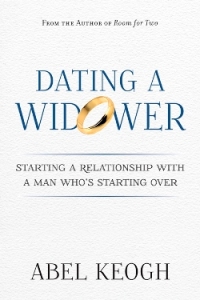
A blogger for over a decade, Abel’s focus via the Widower Wednesday series, a q&a column for women who are in relationships with widowed men and find themselves dealing with problems that aren’t covered by the women’s magazines and self-help literature, came about as a result of Abel responding to the specific concerns of readers who were flooding him with emails, hoping for advice and a peek into the widower’s mindset where moving on into a new relationship was concerned. Widowhood is not divorce, and many women find they have no frame of reference for issues that are bereavement driven. They also sometimes wonder if the issues they are struggling with are actually grief issues at all. In addition to the blog, Abel also began hosting a peer-to-peer group on Facebook where women who are in relationships with widowers could gather privately to exchange stories, vent, seek insight and encourage each other.

The emails, blog posts and DAW group eventually became the basis for the  Dating A Widower book.

The book itself is a nuts-and-bolts look at moving on, dating and remarriage when widowhood is at least half the equation. Each chapter deals with specific problems/issues that are common concerns and illustrated with stories of real women and how they’ve coped. Although it might appear that the point of view is primarily from the male perspective, the gender perspectives are quite evenly balanced and Abel allows his contributors to share their insight and hard won wisdom, allowing the reader to take what they want or need from each chapter.

At 114 pages, it’s a quick and comprehensive read. Abel shares his own story, culminating in his remarriage 15 months after the death of his first wife, and his now wife, Julie, contributes her perspective as well, which provides a welcome “other side” that most relationship stories don’t provide. They both write from the heart, and their story provides a good model for any “mixed” marriage couple to follow.

There is even a chapter written specifically for widowed people who are, or are thinking about, dating. Given the dreadful lack of literature dedicated to widowed folk who are past active grief and looking to move on and remarry at some point, this is a welcome – and well done – addition.

If a reader is looking for a book that validates the idea that widowers are not first men but fragile souls in need of rescue or retraining as though they were wet behind the ears pups, this is not that book. Instead, it reminds the reader that the widowed man is a man first and always and a bereaved spouse second or even farther down the list depending on his personality and responsibilities. It also emphasizes the basic bit of dating knowledge that all women should have tattooed on themselves somewhere that it’s easy to see and read, “a man who loves you will move mountains to show you how he feels and a man’s actions are worth more than a thousand of his words”. So, if a reader wants straight answers, practical and applicable advice and compelling real life stories she can relate too – this is just the book you’ve been searching for – so far probably in vain.

Dating A Widower – Starting a Relationship with a Man Who’s Starting Over by Abel Keogh is available in several formats and more information can be found here.


Day 150: And that's that.

Image via Wikipedia

The Divorced and the Widowed normally agree to share a thin isthmus of common ground where the idea that each state marks a loss of a marriage is concerned, but while the Divorced believe the losses are slight variations on the same theme, Widowed adamantly object to what they see as a presumption.

Divorced feel that mourning the end of a marriage with its letting go of hopes, dreams and an intimate enduring relationship mirrors very closely the process that widowed must also go through.

“Except for that dead body in the room,” widowed counter.

And they are correct.

Let the howling protest of dissent begin.

Read Full Article


Cards

Image by jeff_golden via Flickr

And you know what I am talking about widowed people. That handy-dandy “get me out of anything” excuse that your late spouse bequeathed you by merely dying young. It’s a temptation that is almost too much for any widowed person to resist, using the aftermath of their spouse’s death to guilt people into … anything really. The widow card has few equals, and even fewer betters, when it comes to manipulating others.

Did I say that? Out loud?

Yes, I did. Pulling the widow card is a blatant form of emotional manipulation*. One that we all have used but is frankly always wrong. Sorry, to rain on you with reality, but no matter what the situation was – applying guilt liberally as a remedy isn’t going to earn you gold stars in any version of the afterlife. People who’ve been played by a widow know full well they are being strong-armed, and even when they go along with it out of misguided sympathy, it probably didn’t keep them from resenting you for it.

But what I really want to discuss are not the times you pulled the card to wiggle out from under a late fee on the Visa or sneak away from work a little early. I want to discuss the completely inexcusable practice of using widowhood to gain the upper hand in an intimate/dating relationship.

We’ve discussed (oh, okay, I’ve discussed at you) the concept of being ready to date again. When? Why? How? And I touched on the real need to be ready to engage with another person equally and honestly about where you are emotionally and what you are really looking for and expect. It does no one any good to go into a dating situation when you are still inclined to use your widowhood as a means to distance yourself emotionally or “hog the remote” where the pace and direction are concerned.

One of the biggest widow card offenses I’ve noticed in my travels here and there in the webosphere of widowed and those who date them is the “I need time”. Or space or a Tardis perhaps. Because intimacy with a new person after you’ve lost the old one to death can stir up some (or a lot) of conflicting emotions.

Know this – if you are really sure that the new person is “the one” and love them for them, conflicts become details to be tackled one at a time and without the need for space. Indeed, taking a “break” is very anti-relationship. You can’t work on a relationship with another person with just yourself. The other person’s input and presence is requirement. Relationships can’t grow if one of you is constantly heading out into the woods for a retreat or to commune with (and by commune, I mean wallow) in grief.

Men, and women, who pull the widow card version of “give me time” and tell you that they will “be in touch” are screwing with you.

And I can hear their screams even as I type this:

NO, we are not using the unfair advantage our grief gives us in the sympathy department to make sure that we have the most say in this relationship because our feelings are the more delicate … and important … and that we feel we should be the only voting members at the table.

But they are.

Society, grief culture and the ever-growing battalion of widowed aids via message boards, websites and organization (not to mention the support groups for people – mostly women – who date widowed – encourage widowed ( and their new partners) to look at their situation as a “condition” that needs to operate outside the standard boundaries of how “normal” people are expected to behave when dating.

If a divorced or single man says, “I need space.” Nine times out of ten he is dumping you. Disingenusously to be sure, but weaseling out nonetheless. Widowers are men. They know the manly ways out of relationships that are past their freshness dates or simply aren’t good fits. And though the nine out of ten may actually be eight out of ten for them, “I need space” that lasts for longer than a week is still “I’m not into you anymore”. Grief might be the excuse he is giving himself to make him feel better about having lead you on, but it’s still a widow card. And it is still manipulative of him to use his dead wife to avoid telling you that things are now “off”.

Widows also use the widow card to keep their dates in line. To train them to expect overbearing and callous behavior of their late wife’s family and friends or not be impatient about the non-parenting they are doing which has led to unmanageable and manipulative children (of all ages). Widowed who like being the only one in the driver’s seat will “card” their significant others into putting up with always being second or third on the VIP list, being okay with shrines to the late spouse, tolerating occasional, or regular, “grief retreats” that require radio silence that can last days or weeks or months. After which the widow card is good for  “get back into your graces as though I haven’t been a complete asshole” use.

I’ve said it before and I will continue to say it. Grief is no excuse. Despite its handiness and usefulness, it’s wrong to blackmail others emotionally, and the farther out a widowed person is from their spouse’s death – the less okay it becomes**.

Some people have a different take, but some people enjoy (thrive even) in drama and the stew of high school tinged drama. All you have to do is watch reality tv to know the truth of that.

So widowed folk, if you are ready to date – or are dating – it’s time to put away your stash of widow cards, man up and do your date or new SO the same favor you did for your late spouse – play fair. Be emotionally and physically available for participation in this relationship you are creating. It’s foundation will only be as strong as you choose to make it.

To those dating/intimately involved with a widowed guy or gal, hold them to the same standards you would if they didn’t have this tragedy in their past. Their feelings are not existing on some higher plane than your own. If they need time and you are inclined to wait on them, don’t be conned into something open-ended that leaves you hanging. Set some rules. Ask and expect for your feelings to be taken into account. Don’t be a doormat.

*And I did this. Used my widowness to weasel and manipulate. Especially in that first year and I did it because it works. I did not use it while dating – much – but beware that all widowed people know the power of a dead spouse. All.

** And I don’t want to hear about the total bullshit “latent grief” thing. It doesn’t exist. Some people will use old tragedy to avoid dealing with new hurts but that doesn’t give standing to the idea that grief can be buried and resurface like some zombie in B movie.