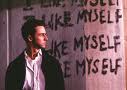
Self-image


The unknown narrator, or is he Tyler Durden, ponders an IKEA catalog, wondering what his stuff says about him. But it’s not just stuff, it’s attitude about/identification with things and how what we wear, listen to, read and watch comes to represent us in the world.

Programmed from near birth, we come to view externals as part of ourselves and believe that they lift us or damn us according to society’s ranking of them and hence us.

Our musical tastes, for example, allow the majority to rule us. We are cool or not so much depending on our earworm preferences. Liking Nickelback and Taylor Swift earns scorn while pretending to get the deep meaning of Tool rates high social marks.

I like Nickelback by the way. Just plain old pop/rock and occasional boy band ballad-e-ness with a bit of growl. Pretentious? Perhaps. Lyrically challenged? Most definitely. Fun? In my opinion, yes.

I listen to Tool as well though I prefer Perfect Circle. It’s also pretentious, but it’s angsty in a discomforting way that allows people to pretend it’s more meaningful than Daughtry and therefore elevates the listener to some level the masses just “wouldn’t understand”. Forgetting all the while that music is poetry and poetry’s meaning is subjective and totally relative.

What kind of music defines me as a person?

And what does it say about me that I need external definition?

Yesterday was “cheer up, Keanu day”. Generated by a viral paparazzi shot of the actor morosely munching a sandwich on a park bench in a decidedly homeless guy sort of way, people with a soft spot of maligned movie stars decided to dedicate a day – and a Facebook page – to share their fond memories of his movies, music and their actual encounters with Reeves.

It reminded me of a memorial service.

For a man who’s not dead in case anyone missed that. Although maybe in a world obsessed with whatever one has done lately, a career not in full throttle is akin to a death of sorts. Even middle-aged men are put to pasture in Hollywood, however, but if I had Reeves resources, I doubt that I would be pushing myself very hard either.

Oh, wait. I am not pushing myself. Nevermind

What kind of movies define me as a person?

Can I be defined by the fact that I sometimes watch films just because the actors are pleasantly attractive? Or that I am sufficiently imaginative to be able to immerse myself in a story regardless of the quality of the acting and the CGI?

The latter perhaps is the more admirable quality but the former is nothing to hang one’s head shamefully over.

My fondness for Virgo men aside, I like Reeves the actor. I never have difficulty believing he is his character in a way that “better” actors like Tom Hanks, for instance, can never not be “Tom Hanks” regardless of the film.

Because I prefer to not wear make up, live in my yoga togs and forsake underwear, am I bohemian? Does being a yoga teacher/blogger make me trendy or edgy? Or does the fact that I’ve blogged for money blogs rob me of “cool” cred?

I’ve viewed people from way atop the bridge of my nose, but that vantage point didn’t put me above anyone as much as it revealed my own pettiness and superficiality.

What defines you as a person? Music? Movies? A dining set?

I’m still trying to find my true self. Excavate her, really.

But in the meantime, I like Nickelback and Keanu Reeves’ movies and buying my yoga duds at Sears.


I found this on a yoga blog.

What I have now, probably for the first time ever in my life, is enough.

I am not complacent about it.

I recognize that relationships are active and therefore require tending. I know that nothing about the strata of society I occupy is immune to disaster.

But in societal terms I have come to recognize as my norm, what I have is plenty. There isn’t a single thing or experience I lack. My emotional well brims and is replenished continually.

Perhaps this is what has been nagging at me of late.

My conscious mind – conditioned as it has been by years of North America consumer driven life-style and middle-class faux career ambition – feels I am not working hard enough to be … what? I don’t know. My inner-self has been quite weepy about it in a pushed around little girl sort of way.

She knows we have enough. Time to acknowledge it and let a few things go.

I have dreams. Modest and unassuming. But they are not deal-breakers for me and really never were.

I have enough. It’s almost verboten to say that out loud as many people fear it invites the active mocking of the fates. That’s flatly ridiculous. Nothing is permanent and fate has nothing to do with that anyway.

If you ever had enough, could you recognize it?

A fair question.


Yoga training typically culminates on a late Sunday afternoon with the Sutras. We’ve hit chapter two, which is the meat of the mental practice – because yoga is all about reaching the interior whether it be the muscles and organs or the thoughts and emotions.

We spent a great deal of time on teaching beginners, so Patanjali got shorted. Thirty-five minutes is inadequate to the task of fleshing tapas.

Tapas?

Tapas is all about the pain and the letting it go. Emphasis on “letting it go”.

Patanjali insists that we are only anchored to the physical world through the pesky inconvenience of having bodies. Bodies that are not us.  The true “me” of me is not my body at all. Therefore, all experience happens to the body and what “I” should be doing is experiencing, acknowledging and then letting it go.

Everything. Good, bad, meh and bloody awful. Feel it. Know it. Wave goodbye.

“Nothing is permanent,” Cat, our instructor, pointed out.

True. It’s our attachment to the idea that good things should have no end and bad things are unfair (I’m overly simplifying) that leads us into the mud and mires us there.

I just listened.

Not because I have no thoughts or concrete experiences to share, but because I know that this is one of those deceptively simple ideas that become nightmarishly difficult when reality envelopes a person.

“Our reactions are choices,” another woman chimed in.

Essentially, we can shape our lives through letting go or just acknowledging that all experiences are finite.

And here the conversation veered into the anecdotal experiences that, I think, aren’t helpful.

A fellow student was in a serious accident and was told by her doctors that she would never regain the use of her arm. She told us that had she listened to the doctors, she would indeed have no function, but she chose to ignore them and rehabbed herself to the point where she is now able to use her arm – not 100% – but no one could tell by simply looking at her that she has difficulties.

I hate these analogies. They are exceptions and they lead others to believe that we are all destined to be exceptions when we aren’t.

We are the rule. Sometimes reality is what it is. No exceptions.

This doesn’t preclude trying to be an exception but it does mean that more often than not, one will have to accept that they are the rule and then – let it go.

“We can change our reality,” Cat said.

But we can’t. Reality is. Sometimes all we can choose is our reactions and how to live within the reality. There are some realities that can’t be let go. They can only be managed.

Managed isn’t the best term, I’ll admit, but there are experiences that stick even though we have let them go.

Will is dead. I have a dead first husband. Not much I can do with that. Very little to work with. Certainly can’t change it.

But I can acknowledge it and let it go, knowing that its effect on me is permanent and that “letting go” might have to be revisited periodically throughout my life.

Same holds true for my classmate. If she had not been able to regain the use of her arm, she would still have had to let the experience go and live within the parameters of her altered reality.

I don’t know if Patanjali addresses this later on, but letting go is a process and it can take years or a lifetime. The choice – I believe – is the attempt to let go in the first place or to cling and not bother.